Museum Exhibit • Preservation Project

Retro-eXo / eXo Project

Retro-eXo is the public-facing home of the eXo Project, a substantial community-led preservation effort best known for curated DOS-era collections. While its scope extends far beyond one genre, it has clear relevance to adventure games, interactive fiction, and other narrative-driven experiences from the PC era.

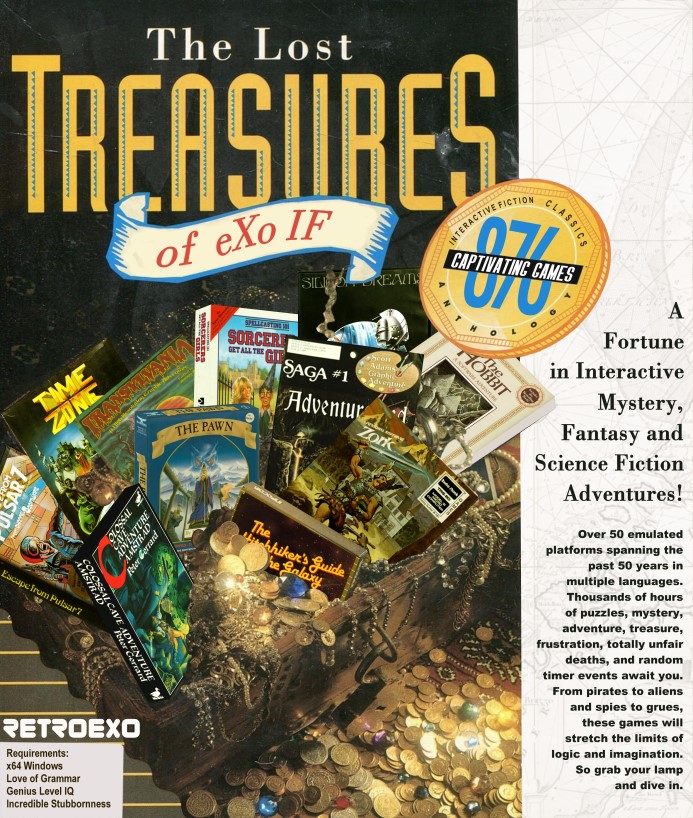
eXo Interactive Fiction collection cover representing preserved text adventure and narrative titles

eXo Interactive Fiction Collection: A curated preservation release focused on text adventures and interactive fiction, highlighting the narrative side of the eXo Project and its relevance to adventure game history.

Why this project matters

Retro-eXo is not simply interesting because it contains old games. It is important because it reflects a serious preservation mindset: organising software, maintaining usability, documenting collections, and making older material easier to approach for modern audiences.

For adventure game history, that matters a great deal. Many story-rich PC titles from the DOS period risk becoming harder to access as original hardware disappears, operating systems change, and knowledge about setup or compatibility fades away.

In that sense, projects like eXo help preserve not only software, but the possibility of continued study, play, comparison, and historical appreciation.

Preservation context

Where Retro-eXo overlaps with adventure history.

Although the eXo Project covers a broad field of DOS gaming, its relevance to Sidon Adventure Archive is clear. The DOS era was a major home for graphic adventures, parser-based titles, hybrids, and narrative-heavy works.

Interactive fiction and narrative games

Text adventures and related narrative experiences often sit alongside better-known graphic adventures in preservation work. Even when a project is not dedicated specifically to IF, its collections can still be highly valuable for researchers tracing how story-driven games evolved across platforms and formats.

  • Parser and text-led titles are part of the wider preservation picture.
  • DOS-era curation can help preserve forgotten hybrid works.
  • Collections like this support research as well as casual rediscovery.

Why curation matters

Raw files alone are not always enough. Older games often need launch knowledge, environment setup, compatibility fixes, and historical framing. A curated preservation project can make the difference between a title technically surviving and being meaningfully accessible.

  • Playability is part of preservation, not a separate issue.
  • Documentation helps bridge the gap between old software and new users.
  • Structured collections are easier to study and reference over time.

Sidon perspective

How this fits into the wider archive.

Sidon Adventure Archive does not aim to replace preservation projects.
Instead, it complements them. Projects such as Retro-eXo help ensure that software collections endure and remain usable. Sidon’s role is to add context: company history, creator profiles, packaging research, interviews, editorial interpretation, and the broader cultural story around the games.